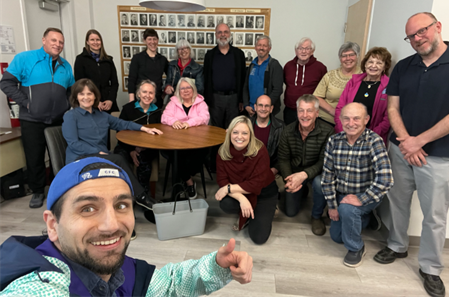

The Climate Change Action Group (CCAG) promotes awareness, education, and proactive measures related to climate change within our local community by working closely with local partners, businesses, and government to inspire both individual and collective action to address climate change and reduce the community’s carbon footprint.
In order to make as much of an impact as possible the CCAG focuses on encouraging sustainable practices, advocating for policies that support environmental protection, and organizing initiatives such as tree planting, clean energy adoption, and community education efforts.
Helping Chilliwack Plant 22,000 Heat-Resistant Trees
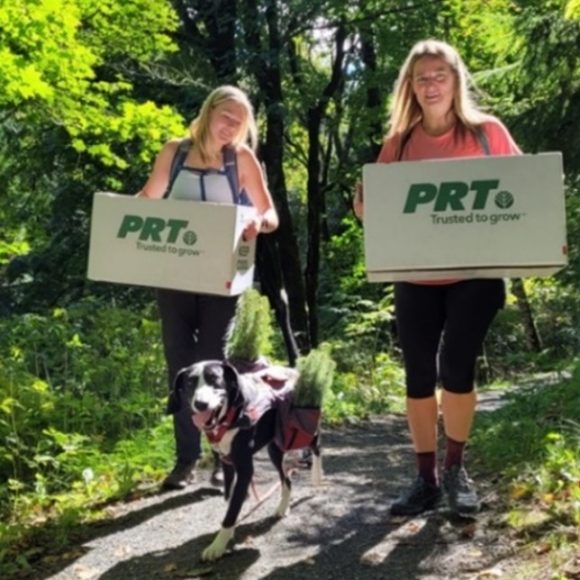
In 2021, the Climate Change Action Group’s first project was to help the City of Chilliwack plant 22,000 heat-resistant trees. The trees selected for this project were specially chosen for their ability to withstand higher temperatures and drought conditions. This ensures they will thrive in Chilliwack’s changing climate, providing shade and cooling benefits for years to come.
By planting heat-resistant trees, Chilliwack is taking proactive steps to mitigate climate change’s impacts on its urban environment, promoting biodiversity, and fostering a healthier, more sustainable city.
Forest Rescue and Rehoming Initiative
In a remarkable effort to protect and preserve the region’s natural ecosystems, over 200,000 Douglas-fir and Redcedar trees were rescued after being deemed surplus by the provincial government. Rather than allowing these vital trees to go unused, the initiative sought to find them new homes in locations where they could contribute to reforestation, biodiversity, and climate resilience.
This initiative not only saved 200,000 trees but also set a precedent for future conservation efforts. By finding a second life for surplus trees, the project demonstrates the importance of resourcefulness in environmental stewardship, ensuring that every tree has the potential to make a difference in combatting climate change and restoring ecosystems,
Climate Change Education Kit for Elementary Schools
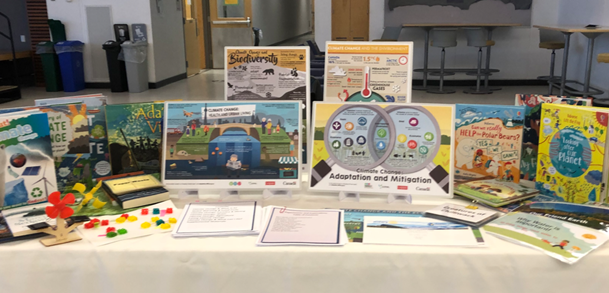
In partnership with School District 33, several of our members developed an innovative Climate Change Education Kit to help elementary school teachers introduce climate change concepts to young students in a way that is engaging, age-appropriate, and easy to understand. This initiative aims to raise awareness from an early age and empower students to become environmental stewards in their communities.
These kits have been provided to every public elementary school within School District 33. By equipping teachers with this resource, the initiative fosters a generation of informed, climate-conscious young people. The kit is designed not only to educate but to inspire children to think critically about their role in addressing climate change, helping to build a more sustainable future from the ground up.
Key Features of the Education Kit:
Age-Appropriate Content
The materials are designed to be accessible for children in elementary grades, using simple language, colorful visuals, and interactive activities that break down complex climate science into digestible lessons.
Interactive Learning Modules
The kit includes hands-on activities, experiments, and games that help students explore topics like the greenhouse effect, the impact of human activities on the environment, and the importance of renewable energy and conservation.
Curriculum Alignment
The kit is aligned with provincial education standards, ensuring that teachers can seamlessly incorporate it into their existing curriculum. It covers key topics in science, social studies, and environmental education.
Multimedia Resources
In addition to printed materials, the kit provides storytelling elements that captivate students’ imaginations and enhance their understanding of climate change.
Empowering Action
A key component of the kit is teaching students how they can take action to protect the environment. It encourages small, practical steps, like reducing waste, conserving water, and planting trees, that children can easily adopt.
Chilliwack Rotary’s Carbon Compensation Program
Chilliwack Rotary’s Carbon Compensation program allows both the Rotary Club and its members to offset their carbon footprint by donating the dollar equivalent. This program fosters a collaborative approach to tackling climate change. Members feel empowered to contribute to meaningful change, while Rotary continues to demonstrate leadership in sustainability.
Club Commitment
At the end of the fiscal year, the Rotary Club of Chilliwack calculates its total carbon emissions from the travel that is necessary for the work that we do. To compensate for these emissions, the club transfers funds to the Climate Change Action Group to help support their projects that support the shift towards renewable energy, reforestation, and/or climate education efforts.
Member Contributions
In addition to the organization’s efforts, individual members can contribute by making donations to the Climate Change Action Group to offset their own personal carbon footprint. The benefit of donating to the Climate Change Action Group is that the club members are confident that the funds will be used for projects that align with the group’s mandate of “climate change mitigation”.
Rotary Climate Change Scholarship
Rotary Climate Fairs
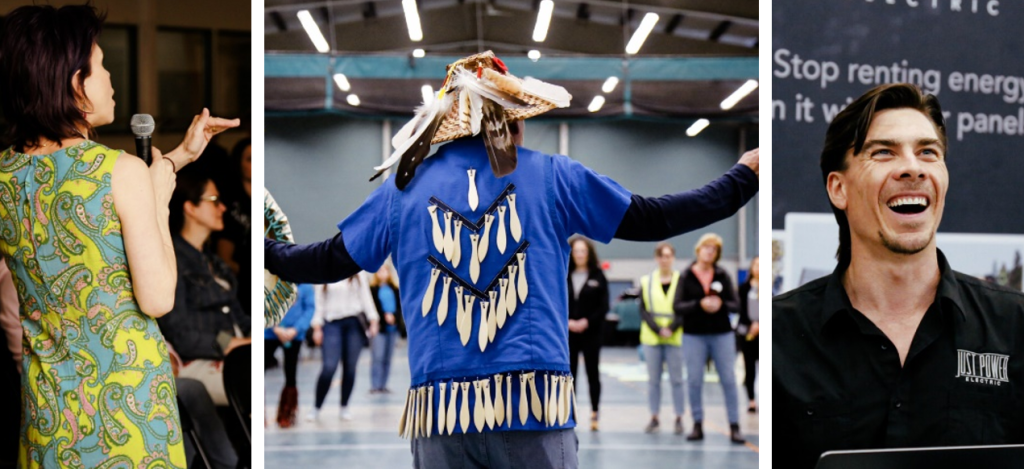
Rotary Climate Fairs are community-driven events organized by the Rotary Club of Chilliwack to raise awareness about climate change, promote sustainable practices, and foster action at the local level. These fairs bring together a diverse group of stakeholders, including environmental organizations, businesses, local governments, schools, and individuals, to educate and inspire people to adopt eco-friendly behaviors and solutions that contribute to climate resilience.
Key Features of a Rotary Climate Fair
Trade Show
Companies can showcase their programs, technologies, products, and services that enhance people’s lives and save them money, while being low-carbon, and gentle on the environment.
Job Fair
The event will be advertised as a job fair so that companies can accept resumes from people seeking jobs in the new and developing alternative energy and low/no carbon industries.
Speakers
A program of experts will be invited to speak on a variety of topic related to sustainability and climate change.
Networking
This event has become a place for leaders working on climate change, sustainability, and renewable energy to meet. Don’t miss this opportunity to make new connections!
Fundraiser
The money raised through sponsorship and booth registration is used for both local and international climate-related projects.
Giving Presentations on Climate Change & Climate Action

Several members of the Climate Change Action Group are happy to give presentations on climate change and climate action to Rotary clubs, service groups, and schools whenever invited, helping to spread crucial knowledge and inspire action within these communities.
The presentations cover key topics such as the causes and effects of climate change, the importance of renewable energy, and practical ways individuals and organizations can make a positive environmental impact and take action
Working with Government Officials
CHILLIWACK SCHOOL BOARD
Members of the Climate Change Action Group provided the Chilliwack School Board with a presentation urging them to consider transitioning from fossil fuels to renewable energy sources for both school facilities and school-related transportation. This vision, if adopted, would position the school district as a leader in the fight against climate change and create a healthier environment for future generations.
Key Points Presented
Renewable Energy for Schools
The proposal encourages the installation of solar panels, geothermal systems, and energy-efficient upgrades in schools to reduce dependence on fossil fuels. Transitioning to renewable energy would lower operational costs over time and demonstrate a commitment to sustainability.
Electric School Buses and Transportation
Shifting the school bus fleet and other school-related transportation to electric vehicles or other renewable energy-powered options was highlighted as a way to cut greenhouse gas emissions and reduce air pollution around school zones.
Cost and Savings
While initial investments may be required, the long-term financial savings from lower energy costs and maintenance were discussed, alongside the potential for government grants or incentives to support the transition.
MUNICIPAL
A presentation was given to the City’s Affordable Housing and Development Advisory Committee highlighting how shifting construction practices can lead to the creation of affordable, low-carbon, high-performance housing. The approach presented aligns economic viability with environmental sustainability, offering a win-win solution for the community.
Key Points Presented
Shifting from fossil fuels
Improving energy efficiency
Reducing both construction and long-term operational costs, and
Enhance residents’ quality of life
PROVINCIAL
The CCAG members have engaged with elected officials to advocate for British Columbia to transition from fossil fuels to renewable energy.
This is a powerful way to influence policy and drive meaningful climate action at the provincial level.
Climate Change Education Series by Dr. Tim Cooper & ChillTV
Dr. Tim Cooper, in collaboration with ChillTV, produced a comprehensive three-part education series that delves into the science, economics, and politics of climate change. This series aims to provide viewers with a well-rounded understanding of climate change from multiple perspectives, helping to bridge the gap between complex scientific concepts and real-world implications.
The series is designed to be accessible to a broad audience, including students, educators, and the general public. By addressing climate change from scientific, economic, and political angles, it offers viewers a holistic understanding of the issue and encourages informed discourse and action. This project contributes to the ongoing conversation about climate change by making complex topics more approachable and engaging for all ages.
Episode 1 – The Science of Climate Change:
This episode focuses on the fundamental science behind climate change, explaining key concepts such as the greenhouse effect, global warming, and the role of human activity in accelerating climate shifts. It also features interviews with climate scientists and researchers who provide insight into the latest data and projections for the future.
Episode 2 – The Economics of Climate Change:
The second part of the series explores the economic impacts of climate change, both in terms of costs and opportunities. It examines how industries, governments, and individuals are affected by climate-driven events, such as extreme weather and rising sea levels, and discusses the economic benefits of transitioning to a low-carbon economy, including the growth of renewable energy and green technologies.
Episode 3 – The Politics of Climate Change:
The final episode dives into the political landscape surrounding climate change, looking at international agreements like the Paris Accord, national policies, and the challenges of implementing climate action on a global scale. Dr. Cooper highlights the role of political leadership, activism, and public policy in driving meaningful change, as well as the barriers posed by climate denial and conflicting interests.
CCAG Book Reviews

Greenwood, Michael Christie
This book is a story about what the future might look like right here in coastal British Columbia. It’s a story about the Greenwood family, torn apart by the greed of timber harvesting and environmental protests. The saga spans from the Depression era to 2038, which is not that far away! We meet family members who are believable characters, set in a familiar landscape, our west coast forests. The people change but the trees are constant. This book is beautifully written, compelling, and rings of truth. Recommended reading for people who love books, sci-fi fans, and environmentalists.
– Debora Soutar
Braiding Sweetgrass, Robin Wall Kimmerer
Nature writing at its best. The author reveals her own discoveries about the natural world and her personal relationship with nature. As a botanist, she focuses on plants and weaves (braids) together botanical knowledge with indigenous wisdom. It reads like poetry or a book of meditations. Both heartwarming and contemplative, readers are invited to explore their own relationship with plants and develop a reverence for the natural world.
– Debora Soutar
Solved – How the World’s Great Cities are Fixing the Climate Crisis, David Miller
Well-researched and easy to read, Solved focuses on energy, electricity, construction, transportation and waste management. There are some inspiring examples of successful city management and superb leadership of mayors. Consider sending a copy to your own city’s leaders!
– Debora Soutar